
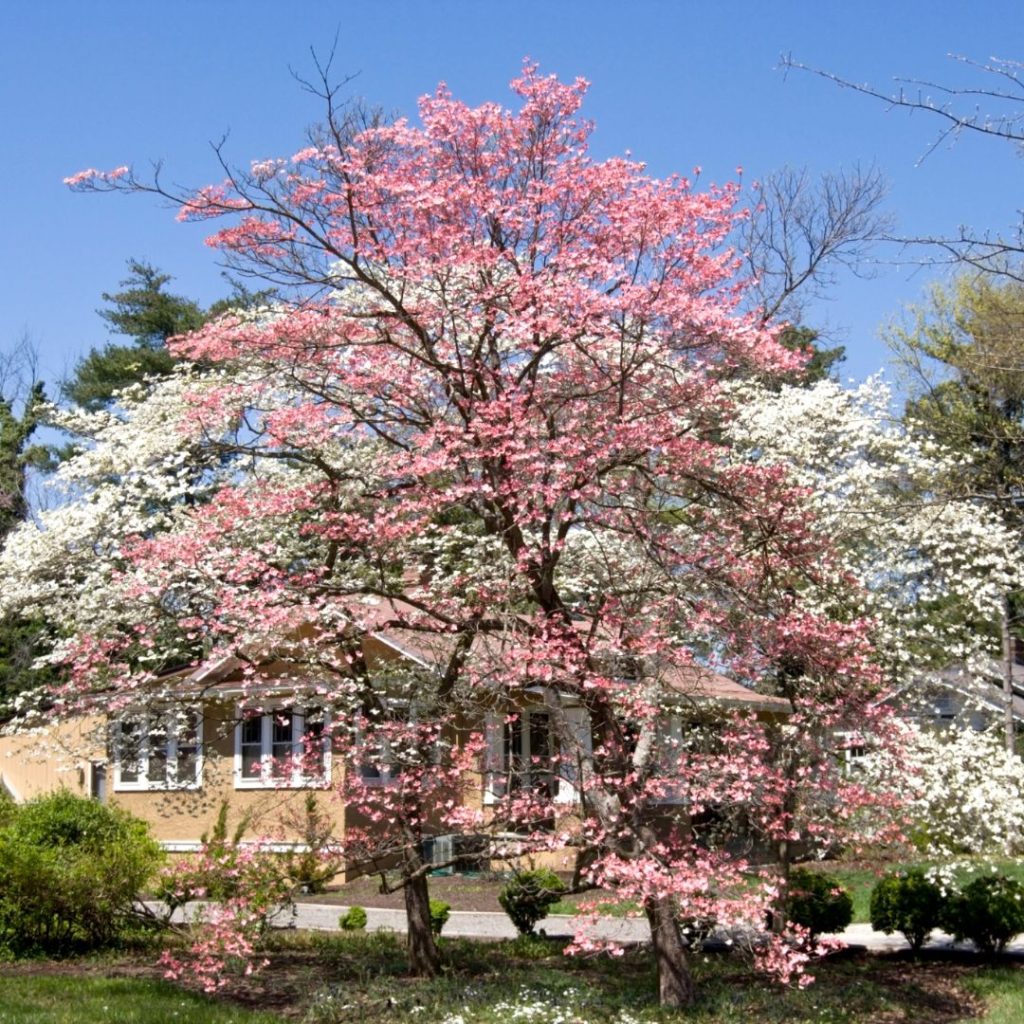
What Are The 7 Best Trees to Plant Near a House?
There are many reasons to consider planting trees near your house. They can provide shade, which can help lower cooling bills during the hot summer months, improve air quality, and increase the curb appeal of your home, which can increase property value. It’s important to choose the right trees to plant near your home, however, as this will allow you to avoid potential problems like root damage to foundations, obstructed views, or excessive maintenance. It is also important to consider the unique factors related to your property, such as soil conditions, the grade of your property, and whether the spot you intend to plant the tree with receive partial or full sun. It is typically best to get the advice of a seasoned arborist near you when planning to plant a tree, as they will be able to give you tailored advice for your property.
In general, here are 7 of the best trees to plant near a house for privacy and shade but which will not damage your foundation.
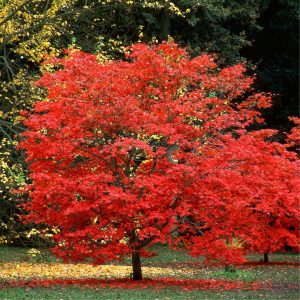
The Japanese Maple (Acer palmatum)
The Japanese Maple is an excellent choice for your yard near your house. These trees typically grow anywhere from 15-25 feet tall and wide, making them an ideal choice for a smaller space, and you won’t need to worry about them eventually towering over your house. Japanese maples are known for their stunning foliage, which goes from a brilliant green shade in summer to a deep red in the fall. The best part about planting a Japanese Maple near your house is that they have a non-invasive root system. This means that their roots won’t damage your foundation or the walkway leading up to your house. When considering a Japanese Maple, it is important to note that they do well in partial shade to full sun, and require soil that drains well, such as loam. To keep your Japanese Maple looking healthy, make sure to prune it regularly and remove any dead branches.
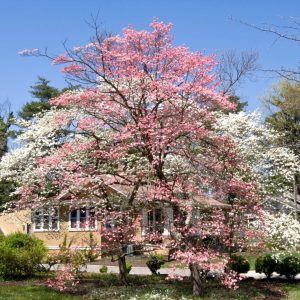
Dogwood Trees (Cornus spp.)
Another popular option for homeowners looking to plant a tree near their house is the Dogwood. These trees grow to be about 15-30 feet tall, and are known for the beautiful white blossoms they show off in spring as well as the vibrant deep red colour they turn in fall. Dogwoods also have shallow, non-invasive root systems, which makes them a safe choice to plant near structures. They do better when planted in partial shade rather than full sun and also require well-drained soil that is also moist. Dogwood require regular pruning to stay healthy and retain an aesthetically pleasing look, but it is best to hold off on pruning until after they have flowered.
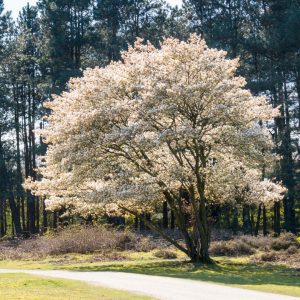
Serviceberry (Amelanchier spp.)
Serviceberry trees, also referred to as Juneberry, or Shadbush, are trees that are well-suited for Ontario’s climate. These trees grow 15-25 feet tall, making them a perfect addition for a small to medium yard. Serviceberries bloom with lovely white flowers in the spring, which are great for pollinators and then provide little red edible berries that taste similar to blueberries. These can be for jellies, cobblers, or dessert toppings. These trees also have non-invasive root systems, which make them safe to plant near homes. They are able to tolerate full sun to partial shade and prefer moist, well-drained soil. It is best to prune these trees somewhat regularly to maintain their desired shape and to remove suckers from growing.
The Eastern Redbud (Cercis canadensis)
The Eastern Redbud is a beautiful addition to any yard. This gorgeous tree can reach 20-30 feet tall and produces stunning pink or purple buds in the spring that are stunning when in full bloom as well as heart-shaped leaves. The Eastern Redbud has a relatively non-invasive root system, making it suitable to plant near houses. Eastern Redbuds thrive in full sun but can manage in partial shade and prefer well-drained soil. It is best to prune these trees after they have bloomed to help maintain their shape and to remove any dead branches.

Crape Myrtle (Lagerstroemia spp.)
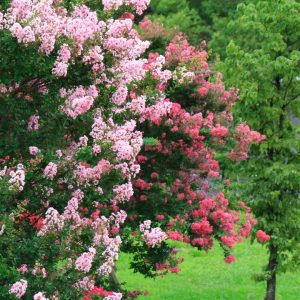
Another great option for a tree that does well planted near houses is the Crape Myrtle. These trees are available in many varieties that range from 10-30 feet tall, which makes them a versatile option for different yard sizes. These trees are known for their long-lasting summer blooms in various colors from creamy white to shades of deep pink, red and purple. Crape Myrtles also have non-invasive roots, which means you don’t need to worry about them causing damage to your foundation or walkways. They do best when planted in full sun to provide a better aesthetic with full blooms. They are a somewhat hardy tree that can tolerate a variety of soil types but do prefer well-drained soil. When tending to the Crape Myrtle, it is best to prune them in late winter to encourage new growth in the spring and to enhance their overall appearance.
Magnolias (Magnolia spp.)
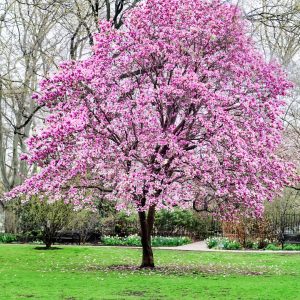
Similar to the Eastern Redbud and Crape Myrtle, the Magnolia Tree is known for it’s stunning flowers that bloom in the spring. This tree is also a good option for homeowners looking to plant a tree near their house. Depending on the variety, magnolias can range from 15-30 feet tall. These trees pinky-white flowers are not only beautiful but also fragrant with glossy leaves that add significant aesthetic appeal to any yard. Magnolias generally have a compact root system, making them safe to plant near homes. They thrive in full sun to partial shade and prefer slightly acidic, well-drained soil. These trees only require minimal pruning as needed. Homeowners really only need to pay attention to any dead or damaged branches that should be removed to keep the tree healthy.
Hawthorns (Crataegus spp.)
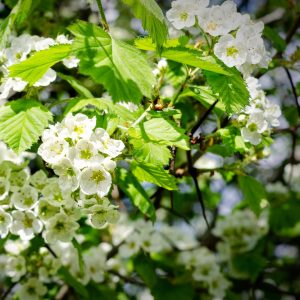
Hawthorn trees are another great tree option to plant near your house. These trees can grow 15-25 feet tall and spread out in a bushy way that works well as residential trees in yards. These trees produce beautiful white flowers in spring and attractive red berries that are edible and look like small crab apples. Hawthorns also have a non-invasive root system, so your home’s foundation is safe. They prefer full sun, but can tolerate various soil types, though well-drained soil is ideal. Pruning requirements are minimal for this type of tree, mostly to remove suckers and maintain their shape to keep the tree healthy and attractive.
How To Choose The Right Tree To Plant Near Your House
When it comes to choosing the right trees to plant near your house, you need to consider the tree’s size, root behavior, overall maintenance needs, and the aesthetic you are looking for. All of the trees mentioned above are excellent choices due to their non-invasive roots, manageable size, and year round beauty. By selecting the appropriate type of trees to plant near your house, you can enhance the beauty and functionality of your landscape while ensuring the safety and integrity of your home. If you are looking to plant a tree near your house in the Newmarket, Aurora, or Uxbridge area, our tree care experts at Sequoia TreeScape can help. We have years of experience and can offer helpful tips and suggestions. Or if you need someone to handle the pruning of the trees in your yard, we have you covered. If you are looking for tree work or a tree removal near you then contact us today for your free estimate. The Sequoia TreeScape team is only one call away at (416) 770-8733.
And also see our articles on Fastest Growing Trees, and The Best Fruit Trees to Plant for more helpful tree tips.
Until Next Time,
Matt Gladwin – Owner
Certified Arborist