
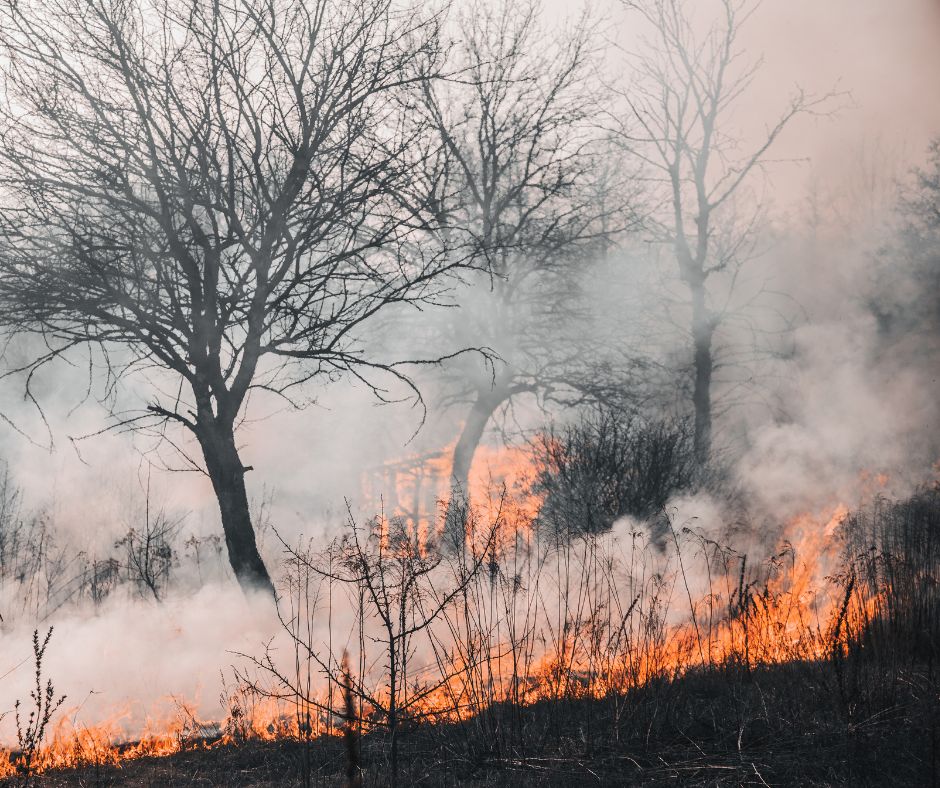
Do Burnt Trees Recover?
When a fire damages a property, most homeowners immediately focus on the obvious concerns: the house, outbuildings, fencing, and landscaping. Trees are often overlooked, especially if they’re still standing after the fire. However, just because a tree survives a fire doesn’t mean it’s safe. In many cases, fire can cause significant structural damage that isn’t immediately visible, leaving a tree vulnerable to failure months or even years later.
If you have trees that have been exposed to fire, it’s important to understand how fire affects them and whether removal may be necessary.
How Fire Damages Trees
Trees are remarkably resilient organisms. Depending on the species and the intensity of the fire, some trees can recover from moderate fire damage. The challenge is determining whether the tree has simply been scorched on the outside or whether the fire has compromised its structural integrity.
Fire damages trees in several ways. It can burn through the bark, damage the living tissue responsible for transporting water and nutrients, and weaken the wood itself. In severe cases, the intense heat can dry out internal tissues and reduce the tree’s ability to flex and absorb wind loads.
Even when a tree remains standing after a fire, the damage may continue to affect its health over time. A tree that appears stable today could begin declining months later as hidden injuries become more apparent.
Why Standing Tree Doesn’t Always Mean Safe Tree
One of the most common misconceptions is that if a tree is still standing after a fire, it must be fine. Unfortunately, that’s not always the case.
Trees rely on their ability to bend and move with wind. Healthy wood contains moisture and living tissue that help absorb stress. Fire can alter those properties. When a tree loses moisture, suffers extensive bark damage, or develops internal decay after the fire, it may become brittle and more prone to cracking or failure.
This is especially concerning for larger trees near homes, driveways, patios, playgrounds, or other areas where people regularly gather. A tree may survive the fire itself but become a hazard during the next windstorm.
The Hidden Risks of Fire-Damaged Trees
One of the biggest challenges with fire-damaged trees is that the damage is often difficult to assess from the ground. A tree may have:
- Internal cracking that isn’t visible from the outside
- Heat-damaged wood higher in the canopy
- Root damage below the soil surface
- Structural weaknesses that only become apparent under load
For arborists, these conditions create significant safety concerns. Fire-damaged trees are often unpredictable because the normal assumptions about wood strength no longer apply. In many cases, arborists will avoid climbing fire-damaged trees altogether. If there is any doubt about the tree’s structural integrity, specialized equipment such as spider lifts, bucket trucks, or cranes may be used instead.
Can a Fire-Damaged Tree Be Saved?
The answer depends on the extent of the damage. Some trees can recover remarkably well when only a small portion of the bark has been affected and the root system remains healthy. Mature trees that experience minor scorching may continue growing for decades with proper monitoring.
However, when a significant percentage of the trunk circumference has been damaged, when large scaffold limbs have been compromised, or when the root system has been affected by intense heat, the likelihood of long-term survival drops considerably.
An arborist can evaluate factors such as:
- The percentage of bark damage
- The overall health of the canopy
- Evidence of internal decay
- Structural stability
- The tree’s location and risk level
Sometimes the recommendation is to monitor the tree. Other times, tree removal is the safest and most practical option.
Recent Tree Work: Fire-Damaged Trees at Research Facility
The Situation
After a large barn fire at a University of Toronto research property, dozens of mature trees surrounding the structure were left charred and structurally compromised.
The Challenge
- Trees could not be climbed due to fire damage
- Internal structure weakened (loss of flexibility → risk of snapping)
- Trees leaned away from the only safe drop zone
- Poor working conditions (mud, snow, limited traction)
The Approach
The crew designed a system to safely remove the trees:
- Installed high anchor lines and pulleys in adjacent trees
- Used trucks and equipment to pull trees against their natural lean
- Carefully controlled the fall direction into the barn footprint
The Result
- Safely removed 30–40 mature trees
- Avoided damage to surrounding structures
- Completed the project despite difficult terrain and weather
Key Takeaway
Fire-damaged trees are unpredictable and often unsafe to climb. Strategic rigging and controlled pulling techniques are essential in these situations.
Contact A Local Arborist About Your Scorched Tree
Not every fire-damaged tree needs to be removed, but every fire-damaged tree should be evaluated. Fire can weaken a tree in ways that aren’t immediately obvious, creating safety risks long after the flames are gone. Whether a tree can be saved depends on the severity of the damage, its overall health, and its location on the property. A professional tree assessment is the best way to determine the safest path forward.
If you have trees that have been affected by fire, don’t assume they’re safe simply because they’re still standing. Having them inspected by a qualified arborist near you can help protect your property, your family, and everyone who uses the space around them. Contact Sequoia TreeScape for a free estimate today.