
TL;DR
- Why Prune Hedges: Controls size, promotes health, and encourages new growth.
- Best Time: Late winter or early spring for dormant plants.
- Pruning Steps:
- Assess and remove dead wood.
- Shape and trim edges.
- Clean up clippings.
- Post-Pruning: Expect bare patches and slower growth initially, but fuller growth over time.
- Tips: Prune lightly each year, and mulch after pruning.
- Professional Help: Call Sequoia TreeScape for major pruning needs.
Pruning hedges is a vital part of maintaining a healthy and attractive garden. It encourages new growth, helps manage size, and keeps the plant looking neat. However, it’s essential to approach hedge pruning with the right techniques to avoid causing damage or leaving your hedge looking bare. Here’s everything you need to know about how to prune hedges properly and what to expect during the process.
Why Pruning Your Bushes and Hedges is Important
Pruning your trees, bushes and hedges serves multiple purposes, including:
- Shape and Size Control – Hedges can become overgrown and unruly if not maintained regularly. Pruning helps you shape them and control their size, keeping them neat and within desired boundaries.
- Health – By removing dead, damaged, or diseased wood, pruning helps prevent the spread of pests and diseases and keeps your hedge healthy.
- Encouraging Growth – Proper hedge pruning stimulates new growth and can make your hedge fuller, denser, and more vibrant.
The Best Time to Prune Your Hedges
The best time to prune hedges depends on the type of plant. However, most hedges should be pruned in late winter or early spring when they are dormant. This allows them to recover quickly when the growing season begins. Deciduous hedges (those that lose their leaves in winter) benefit from pruning before new growth starts, while evergreen hedges are often pruned in late spring or early summer.
Avoid pruning hedges during the peak growing season because cutting them back too much can reduce their ability to recover and might cause them to look sparse for an extended period.
Steps to Prune Hedges Properly
- Assess the Hedge – Before starting, take a step back and evaluate the shape and condition of the hedge. Look for dead or damaged branches and areas that may need thinning.
- Remove Dead or Damaged Wood – Start by cutting out any dead, broken, or diseased branches. This allows more air and sunlight to reach healthy parts of the hedge, promoting better overall health.
- Shape the Hedge – If you want to keep a formal shape, use a string or line to guide the sides and top for symmetry. For informal hedges, prune to encourage natural growth but still aim for a uniform shape.
- Cut Back to Encourage New Growth – If you need to reduce the size of the hedge, cut back into the older, woodier parts. Be cautious, as cutting too much of the older wood can cause the hedge to look bare for a season or two. Many hedges produce new growth primarily from the tips, so cutting back too hard can lead to a delay in recovery.
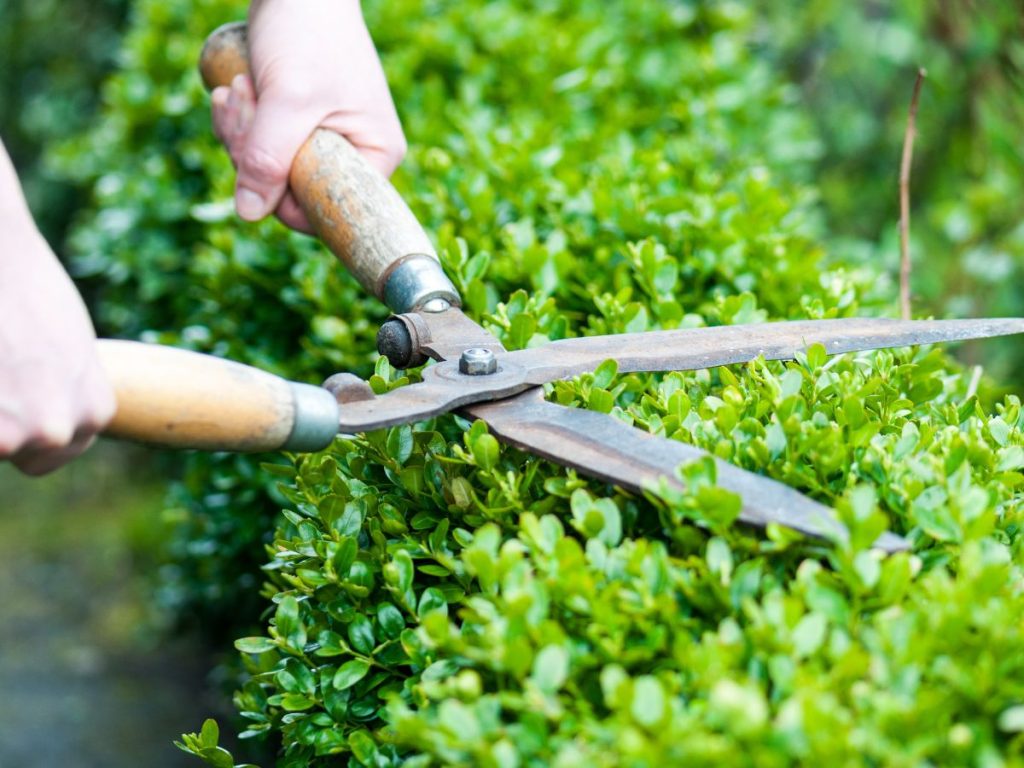
- Finish with Clean Edges – Use shears or a trimmer to ensure that the edges are neat and straight. If you’re shaping a formal hedge, keep the sides slightly wider at the bottom to allow sunlight to reach the lower branches.
- Clean Up – After pruning, remove any clippings or debris around the base of the hedge. This helps prevent pests and disease.
What to Expect After Pruning a Hedge
While pruning is beneficial, it can also be a bit alarming to see your hedge looking sparse. It’s important to understand that by pruning you are removing the outermost layer of the hedge and this is often where the leaves are found. This means that by scaling the hedge back, you can expect to see more of the woody branches instead of the leaves. We like to try to explain to our clients that it isn’t like when you take a picture and then shrink the size, so you need to be prepared for a different aesthetic. Here’s what you should expect:
- Bare Patches – If you’ve cut back into older, woodier growth, expect the hedge to look bare for a season. Many hedges won’t produce new leaves immediately in these areas, which can leave them looking sparse. However, with proper care, new growth will emerge, and your hedge will gradually fill in.
- Temporary Leaf Loss – Especially with evergreens, pruning can cause a temporary loss of foliage. Don’t be discouraged if your hedge looks thinner in the short term. New leaves should appear as the hedge recovers.
- Slower Growth – After a significant pruning, your hedge may take time to bounce back. Growth may be slower initially as the plant recovers, but with proper care (adequate watering, fertilizing, and sunlight), the hedge will regain its fullness.
- Increased Density – Over time, pruning encourages a denser growth pattern. By removing some of the old wood, you allow new, healthier growth to take its place, leading to a fuller, more robust hedge.
Tips for Healthy Hedge Pruning
- Don’t Cut Too Much at Once – If your hedge has become overgrown, avoid drastic cuts all at once. Cut a little each year to prevent stressing the plant.
- Avoid Cutting into Old Wood – Some plants, particularly those that bloom on old wood, may struggle to recover if you cut into this wood too much. Try to prune just the new growth and trim lightly.
- Prune Regularly – Regular light pruning throughout the growing season will help maintain the shape and health of your hedge, so you don’t need to do as much heavy pruning.
- Mulch After Pruning – Apply mulch around the base of the hedge to retain moisture and promote healthier root systems, especially after a heavy prune.
Get Help Pruning Your Hedges and Bushes From A Professional
Properly pruning hedges is essential to ensure your hedge remains healthy, well-shaped, and vibrant. While cutting back older growth can lead to temporary bare patches or slower recovery, understanding what to expect during the process will help you navigate the wait. With time and care, your hedge will return stronger and more beautiful than before. For significant reshaping of a hedge, it is best to call in a professional tree care company near you, as they will have the expertise required to make sure your bushes and hedges are pruned correctly. Contact Sequoia TreeScape for a free estimate for your hedge trimming project. (416) 770-8733
Also see our article on the Best Hedges to Plant in Ontario for Privacy