
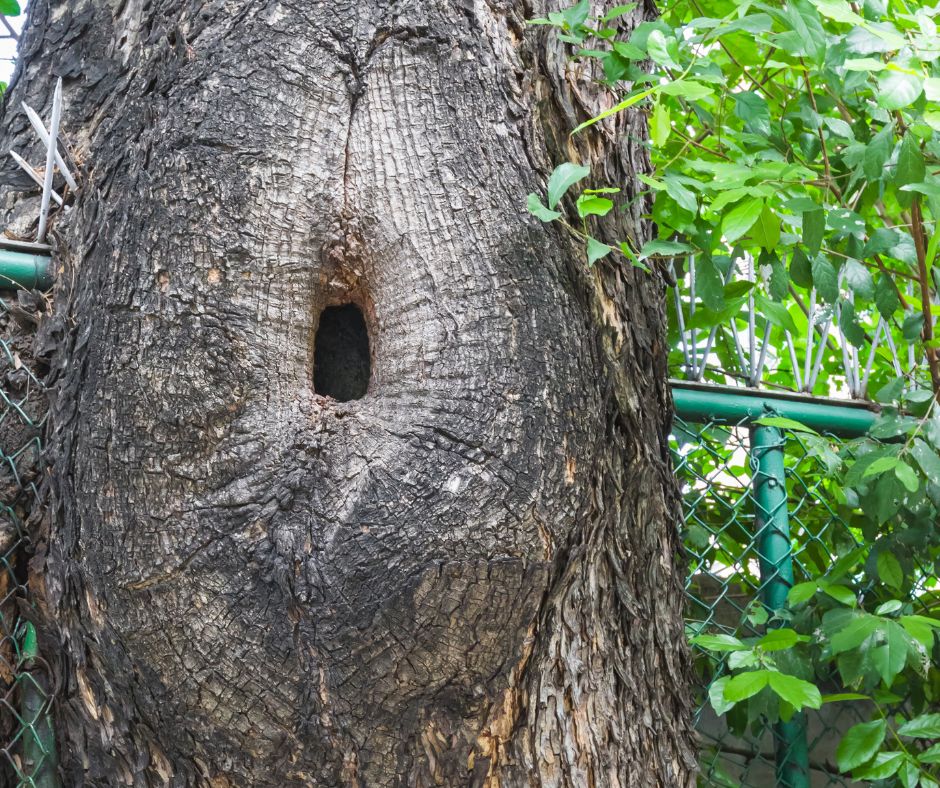
Are Holes in Trees Dangerous?
At first glance, a hole in a tree can seem harmless, even charming. It’s easy to picture wildlife living inside or to assume it’s just part of an old tree’s character. But in reality, a visible cavity is often a sign that something much more serious is happening beneath the surface. Trees don’t heal the way we do. When they’re damaged, they try to seal off the wound, but if the damage is too large or improperly cut, decay can begin to spread internally. What you see on the outside is often only a small part of the problem.
What Causes Tree Rot and Holes to Form in Tree Trunks?
Most holes in trees start with some kind of past damage. It could be a large limb that broke off during a storm, a poor pruning cut, or even long-term stress from disease or pests. Once that protective outer layer is breached, moisture and microorganisms get in and begin breaking down the wood. Over time, this decay doesn’t just stay in one spot, it can travel up and down the tree, creating what arborists call a column of decay.
The tricky part is that a tree can still look healthy from the outside while losing strength on the inside. Leaves may still grow, and the canopy might look full, but structurally, the tree is no longer what it once was. That’s why it’s important to take holes in trees seriously.
Why You Should Never Climb a Tree Above a Hole
One of the most important safety rules in tree work is simple: never climb above a compromised section of the tree. When there’s a hole or visible rot, you can’t fully trust the wood above it. The internal structure may be weakened, even if it looks solid from the outside.
Tree removal work also introduces forces that most people don’t think about. When a branch is cut, it doesn’t just fall cleanly away. It can shift, twist, and pull against the rest of the tree as it separates. In a healthy tree, that movement is usually manageable. In a tree with decay, those forces can cause cracking, splitting, or sudden failure.
For a climber, that risk is even greater because their safety depends on strong anchor points. If the wood is compromised, the entire system becomes unreliable. That’s why experienced arborists won’t take that chance. If there’s significant rot or a cavity, they change the approach entirely, often using equipment instead of climbing.
When a Tree Becomes a Real Risk
Not every tree with a hole needs to be removed, but there’s a point where it becomes a safety concern. As decay progresses, the tree loses its ability to handle stress from wind, snow, or even its own weight. You might start to notice things like cracking, soft or crumbly wood, or sections of the tree that have already failed.
Sometimes the warning signs are subtle, and other times they’re obvious. A tree that has already dropped large limbs or is leaning unexpectedly is often telling you something has changed. The challenge is that failure doesn’t always happen gradually, it can happen all at once when conditions are right.
Why Removing Trees with Large Holes Isn’t a DIY Situation
Working on a tree with rot is very different from trimming a healthy branch. The unpredictability is what makes it dangerous. You’re not just dealing with weight, you’re dealing with stored tension, shifting forces, and weakened structure. Without the experience to read those conditions, it’s easy to make a cut that leads to something moving in a way you didn’t expect.
Professional arborists approach these situations differently. They assess the structure first, then decide whether climbing is even an option. In many cases, they’ll use specialized equipment like lifts or rigging systems so they’re not relying on compromised parts of the tree. It’s not just about getting the job done—it’s about controlling how the tree comes apart safely.
Recent Tree Work Example: High-Risk Tree Removal with Severe Rot
The Situation
A homeowner requested removal of a large basswood tree that had been deteriorating for years. A major section had already broken off and was caught in a neighboring tree.
The Challenge
- Large cavity (rot) 20 feet up the trunk
- Horizontal cracks indicating severe structural weakness
- Unsafe to climb above the damaged section
- Limited space to safely bring the tree down
The Approach
The team initially explored climbing and dismantling the tree in sections but quickly identified it as too dangerous. Instead, they:
- Set up a controlled pull system
- Coordinated with a neighbor to use their yard
- Used a specialized “jump cut” technique to control the fall
The Result
- A large section of the tree was safely redirected into the neighbor’s yard
- No damage to structures (despite high risk)
- Avoided the need for a much more expensive crane removal
Key Takeaway
Trees with visible rot can be extremely dangerous, even if they’re still standing. Proper assessment and creative problem-solving can prevent both injury and unnecessary costs.
Contact Sequoia TreeScape About Removing a Rotted Tree
A hole in a tree is more than just a cosmetic issue. It’s often a sign of internal decay that can weaken the entire structure over time. While some trees can live with cavities for years, others become hazards without much warning.
If you’re looking at a tree on your property and wondering whether it’s still safe, it’s worth having it evaluated. A trained eye can tell the difference between something that can be managed and something that needs to be addressed right away. When it comes to tree rot, it’s always better to be proactive than to deal with the consequences later. Contact Sequoia TreeScape for a free assessment and estimate.